Introduction
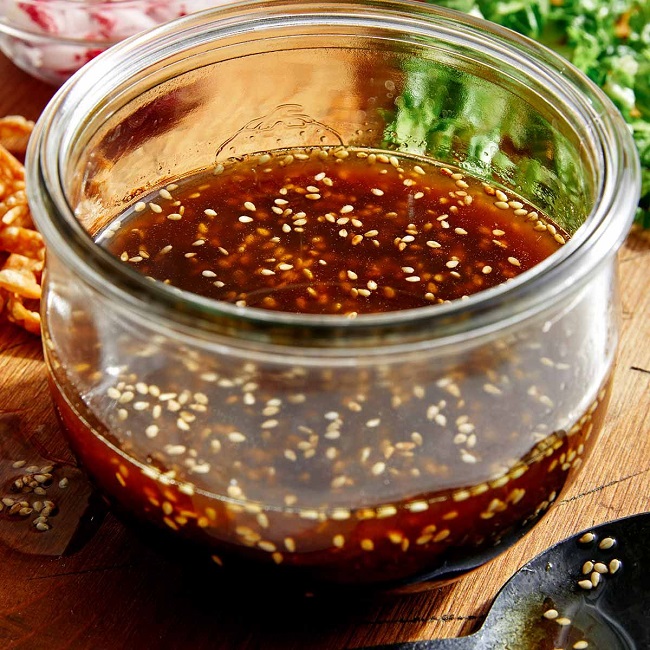
Asian Salad Dressing Recipe is your key to unlocking the rich, bold, and balanced flavors that define Asian cuisine. This delicious homemade dressing perfectly combines sweet, tangy, salty, and umami notes — creating a flavor explosion that transforms any meal into something extraordinary. Whether you’re tossing it over crisp greens, drizzling it on cold noodles, or using it as a marinade for grilled meats, this dressing adds freshness, depth, and authentic Asian flair to every bite.
What makes the Asian Salad Dressing Recipe so special is its harmony of simple yet powerful ingredients. Soy sauce brings savory depth, rice vinegar adds a refreshing tang, sesame oil provides nutty warmth, and honey or maple syrup balances it all with a hint of sweetness. Fresh garlic and ginger tie the flavors together, giving the dressing its signature aromatic kick that makes it irresistible.
The versatility of this Asian Salad Dressing Recipe is what makes it a must-have in every kitchen. It pairs beautifully with vegetable salads, quinoa bowls, grilled seafood, tofu dishes, and even works as a dipping sauce. Plus, it’s quick to make, healthy, and customizable — allowing you to adjust sweetness, spice, or acidity based on your taste.
In this complete guide, you’ll learn everything you need to create the best Asian Salad Dressing Recipe at home — including key ingredients, step-by-step instructions, flavor variations, and pro tips for perfection. Get ready to elevate your salads, bowls, and stir-fries with a dressing that’s light, flavorful, and full of Asian-inspired goodness.
Why You’ll Love This Asian Salad Dressing Recipe
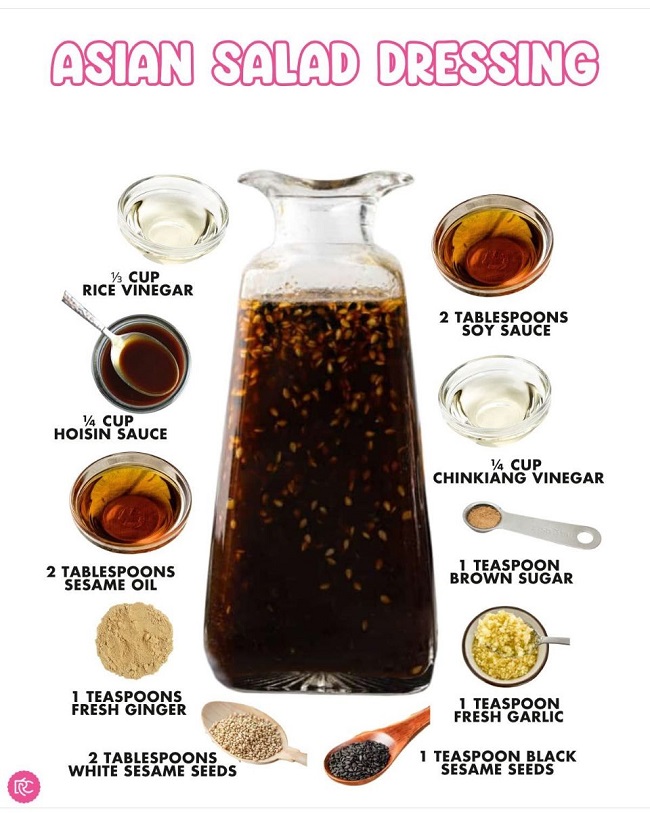
Looking for a fresh, healthy, and customizable dressing that elevates your salads, bowls, and more? This Asian salad dressing recipe is exactly what you need. Unlike store-bought dressings, which are often filled with preservatives, unhealthy fats, and added sugars, this homemade version is packed with vibrant flavors and wholesome ingredients. Plus, it’s incredibly easy to make and perfect for meal prepping.
1. Quick and Easy to Make
This Asian salad dressing recipe is quick to prepare, making it ideal for busy weeknights or meal prepping. In just 10 minutes or less, you can have a flavorful dressing ready to go. Whether you’re preparing a salad, grain bowl, or using it as a marinade, this dressing will elevate your meal in no time.
- No cooking required: Just mix together a few simple ingredients.
- Minimal prep time: The dressing is ready in under 10 minutes.
- Perfect for last-minute meals: Always have a fresh, homemade dressing on hand.
2. Why This Asian Salad Dressing Recipe is Healthier
When you make your own Asian salad dressing, you’re in full control of the ingredients, ensuring it’s both fresh and healthy. Compared to store-bought dressings, this homemade version contains no artificial preservatives, unhealthy fats, or excess sugars. Here’s how this dressing is a healthier choice:
- Fresh ingredients: Made with whole foods like garlic, ginger, and sesame oil, providing more nutrients and flavor.
- No additives: Unlike many store-bought versions, which may contain preservatives and artificial sweeteners.
- Lower in sugar: You can control the amount of sweetener, making it as sweet or tangy as you like.
- Healthy fats: Sesame oil adds heart-healthy fats that promote well-being.
By using this Asian salad dressing recipe, you’re choosing a cleaner, better-for-you option that enhances the nutritional value of your meals.
3. Customizable for Any Diet
One of the reasons this Asian salad dressing recipe is so beloved is its versatility. You can easily customize it to fit any dietary preference or restriction:
- Vegan: Swap honey for maple syrup or agave to create a fully vegan dressing.
- Gluten-Free: Use tamari (gluten-free soy sauce) instead of traditional soy sauce.
- Spicy: For those who like a little heat, add sriracha, chili flakes, or fresh chili for an extra kick.
- Low-Sugar: You can reduce or omit the sweetener for a tangier dressing that fits low-sugar or keto diets.
This customization ensures that everyone can enjoy this Asian salad dressing recipe, no matter their dietary restrictions.
4. Perfect for Meal Prep and Everyday Meals
Whether you’re a busy professional or just want to save time in the kitchen, this Asian salad dressing recipe is ideal for meal prep. You can make a batch at the beginning of the week and store it in an airtight jar in the refrigerator. It lasts up to a week, so you’ll always have a fresh dressing ready to go. Here are a few ways to use it:
- Salads: Perfect for green salads, slaws, or cabbage salads.
- Grain Bowls: Drizzle over quinoa, rice, or couscous bowls for added flavor.
- Grilled Proteins: Use it as a marinade for chicken, tofu, fish, or beef.
- Roasted Vegetables: Adds a flavorful finish to roasted vegetables or veggies on the grill.
This dressing is versatile and will quickly become a go-to option for quick lunches, dinners, and snacks.
5. The Key Ingredients in This Asian Salad Dressing Recipe
The secret to making this Asian salad dressing recipe so flavorful lies in its simple but powerful ingredients. Here’s what you’ll need to make it:
- Soy Sauce: Rich umami flavor, or use tamari for a gluten-free option.
- Sesame Oil: Adds a distinctive, nutty flavor and heart-healthy fats.
- Rice Vinegar: Provides a tangy and slightly sweet undertone.
- Honey or Maple Syrup: Natural sweeteners to balance the acidity.
- Garlic and Fresh Ginger: These add depth and freshness to the dressing.
- Lime Juice: For an extra burst of citrus.
Ingredients You’ll Need for the Best Asian Salad Dressing
When it comes to creating the best Asian salad dressing recipe, the ingredients you use make all the difference. A truly exceptional dressing is fresh, flavorful, and made with high-quality ingredients that complement each other perfectly. In this guide, we’ll explore the essential ingredients for crafting the perfect Asian salad dressing recipe, along with the health benefits of each. Whether you’re making a vibrant salad, grain bowl, or using it as a marinade, these ingredients will ensure your dressing stands out.
Star Ingredients for the Perfect Flavor Balance
| Ingredient | Flavor Role | Health & Taste Benefits |
|---|---|---|
| Soy Sauce (or Tamari for Gluten-Free) | Provides rich umami flavor and salty depth. | Soy sauce gives the classic Asian taste, while tamari is a gluten-free alternative that’s smoother and less salty. Both are low-calorie and full of essential minerals. |
| Rice Vinegar or Lime Juice | Adds tanginess and freshness. | Rice vinegar offers a mild acidity that brightens the dressing. Lime juice adds a zesty citrus flavor while boosting vitamin C and antioxidants. |
| Sesame Oil | Gives a nutty aroma and smooth texture. | Packed with healthy fats and antioxidants, sesame oil supports heart health and enhances every dish with its signature roasted flavor. |
| Honey or Maple Syrup | Balances acidity with natural sweetness. | Honey adds a golden, floral sweetness, while maple syrup makes this Asian Salad Dressing Recipe vegan-friendly. Both are better alternatives to refined sugar. |
| Fresh Garlic and Ginger | Infuse the dressing with depth and warmth. | Garlic strengthens the immune system, and ginger aids digestion — together, they bring bold, aromatic flavor that defines authentic Asian cooking. |
Optional Add-Ins to Elevate Your Asian Salad Dressing Recipe
While the above ingredients form the foundation of an amazing Asian salad dressing recipe, there are a few optional add-ins that can take your dressing to the next level. These additions add even more complexity and flavor:
1. Chili Flakes
If you prefer a bit of heat, chili flakes are a fantastic addition to your Asian salad dressing recipe. They’ll provide a spicy kick, perfect for those who enjoy a little extra flavor.
- Health Benefits: Chili flakes contain capsaicin, a compound that boosts metabolism and may promote fat loss. It also has anti-inflammatory properties.
- Flavor Profile: Spicy, warm, and slightly smoky, giving the dressing a fiery finish.
2. Miso Paste
Adding miso paste to your dressing introduces an even deeper umami flavor. Miso is a fermented soybean paste that gives your dressing a rich, savory, and slightly tangy edge.
- Health Benefits: Miso is a great source of probiotics, which promote gut health, and it also contains protein and essential vitamins.
- Flavor Profile: Savory, salty, and slightly fermented, adding depth to your dressing.
3. Fish Sauce
For a truly authentic Asian salad dressing recipe, consider adding a splash of fish sauce. This ingredient is commonly used in Southeast Asian cuisine, providing a briny, salty depth to your dressing.
- Health Benefits: Fish sauce is a good source of omega-3 fatty acids and protein, which are beneficial for heart and brain health.
- Flavor Profile: Salty, pungent, and rich, fish sauce brings a unique and deep umami flavor.
Why These Ingredients Work So Well Together
The secret behind a perfect Asian Salad Dressing Recipe lies in the harmony of flavors. The salty umami of soy sauce blends beautifully with the brightness of vinegar, while sesame oil adds depth and richness. Honey or maple syrup ties it all together with a hint of sweetness, and fresh garlic and ginger bring warmth and energy to every bite.
When these simple ingredients come together, they create a dressing that’s:
- Healthier than store-bought dressings
- Bursting with natural flavor
- Versatile enough for salads, noodles, or marinades
How to Make Asian Salad Dressing Recipe: Step-by-Step Guide
A homemade Asian Salad Dressing Recipe is fresh, flavorful, and much healthier than store-bought alternatives. With just a few simple ingredients, you can create a perfectly balanced dressing that enhances salads, noodles, grilled proteins, and more. Follow this step-by-step guide to make the best Asian Salad Dressing Recipe at home.
This recipe is quick, versatile, and fully customizable for vegan, gluten-free, or spicy variations — perfect for meal prep or everyday use.
Ingredients for Your Asian Salad Dressing Recipe
Before you begin, gather the following ingredients for your Asian salad dressing recipe:
- 3 tablespoons soy sauce (or tamari for a gluten-free version)
- 2 tablespoons sesame oil (toasted for a deeper, nuttier flavor, or untoasted for a milder option)
- 2 tablespoons rice vinegar or lime juice (depending on your preferred acidity)
- 1 tablespoon honey or maple syrup (for natural sweetness)
- 1-2 cloves of fresh garlic, minced or grated
- 1 teaspoon fresh ginger, grated (adds a sharp, aromatic kick)
- Optional add-ins: 1 teaspoon chili flakes (for spice), 1 teaspoon miso paste (for umami), 1 teaspoon fish sauce (for extra depth)
These ingredients are the foundation for a vibrant, well-balanced dressing. Let’s break down the steps for preparing your Asian salad dressing recipe.
Step 1: Mix the Base Ingredients
The first step in making your Asian salad dressing recipe is to combine the base ingredients in a medium-sized bowl or jar:
- Soy Sauce (or Tamari): This provides the salty umami flavor that’s essential to the dressing.
- Sesame Oil: Toasted sesame oil adds a deep, nutty richness to your dressing, while untoasted sesame oil offers a lighter, more subtle flavor.
- Rice Vinegar or Lime Juice: This adds the necessary acidity and tanginess to balance the richness of the oil and the saltiness of the soy sauce.
- Honey or Maple Syrup: Natural sweeteners like honey or maple syrup help balance the acidity and bring a touch of sweetness to the dressing.
Whisk or shake these ingredients together until they are well-combined. The goal is to create a smooth, flavorful base that will form the foundation of your dressing.
Step 2: Add Aromatics for Flavor
Now it’s time to add the key aromatics that will make your Asian salad dressing recipe stand out:
- Fresh Garlic: Mince or grate 1-2 cloves of garlic for a pungent, savory kick that adds depth to your dressing.
- Fresh Ginger: Grate about 1 teaspoon of fresh ginger for a refreshing, spicy flavor that complements the garlic and sesame oil perfectly.
Stir these aromatics into your dressing mixture. The garlic adds a sharp, savory taste, while the ginger provides a zesty, aromatic freshness.
Step 3: Balance Sweetness and Acidity
To achieve the perfect Asian salad dressing recipe, it’s important to balance the sweetness and acidity. Taste your dressing and adjust the following to your preference:
- Adjust the Sweetness: If you like a sweeter dressing, add a little more honey or maple syrup. For a tangier dressing, reduce the sweetness slightly.
- Adjust the Acidity: If you want a more pronounced tang, increase the rice vinegar or lime juice. This will brighten up the flavors and create the perfect balance between savory, sweet, and tangy.
This step allows you to customize your Asian salad dressing recipe to your specific tastes.
Step 4: Whisk or Shake for Consistency
For a smooth and consistent dressing, you’ll need to properly emulsify the ingredients. Emulsification is the process of combining oil and vinegar-based liquids that don’t naturally mix.
- Whisking: If you’re preparing your dressing in a bowl, use a whisk to vigorously combine all the ingredients. This helps the oil and vinegar blend seamlessly into a smooth dressing.
- Shaking: If you’re using a jar or bottle, close the lid tightly and shake it vigorously for about 15-30 seconds. This method is ideal for making the dressing in advance and storing it in the fridge.
Pro Tip: To make emulsification easier and achieve a creamier texture, add a teaspoon of Dijon mustard. Mustard acts as a natural emulsifier, ensuring the dressing remains well-mixed and smooth.
Step 5: Taste and Adjust Seasoning
After whisking or shaking the dressing, taste it to ensure all the flavors are in harmony. The beauty of this Asian salad dressing recipe is that it’s customizable, so don’t hesitate to adjust the seasoning:
- Add More Soy Sauce: If the dressing feels too light or lacks depth, add a little more soy sauce or tamari for a saltier, umami-rich flavor.
- Increase Sweetness: If you prefer a sweeter dressing, add more honey or maple syrup to taste.
- Boost the Spice: For those who like a spicy kick, add a pinch of chili flakes or a dash of sriracha for heat.
Taste and adjust until the dressing has the perfect balance of savory, sweet, tangy, and spicy elements.
Pro Tips for Perfect Emulsification
To ensure your Asian salad dressing recipe emulsifies perfectly, follow these tips:
- Use Room Temperature Ingredients: Cold ingredients, especially oils, can make emulsification harder. Let your soy sauce, sesame oil, and vinegar come to room temperature before mixing.
- Whisk or Shake Vigorously: The key to a well-emulsified dressing is thorough mixing. Whisk or shake until all ingredients are fully incorporated and smooth.
- Add Mustard for Creaminess: Dijon mustard not only enhances the flavor but also helps bind the oil and vinegar for a smoother, creamier texture.
Step 6: Storage and Shelf Life
Once you’ve made your Asian salad dressing recipe, store it in an airtight container or jar in the refrigerator. It will last for up to 5-7 days, allowing you to enjoy fresh dressing throughout the week.
- Storage: Keep the dressing in a jar or bottle with a tight seal. This will prevent it from spilling or absorbing unwanted odors from the fridge.
- Shake Before Use: Since the oil and vinegar may separate over time, give the dressing a quick shake or whisk before each use.
Popular Variations of Asian Salad Dressing
The Asian salad dressing recipe is incredibly versatile, offering a range of vibrant flavors that can elevate any dish. Whether you’re making a fresh green salad, a grain bowl, or using it as a marinade, the distinct flavors from different regions of Asia will add complexity and freshness to your meals. In this guide, we’ll explore five popular regional variations of the Asian salad dressing recipe—each bringing its own unique taste and flair. From Japanese Goma Dare to Vietnamese Nuoc Cham, these dressings will suit a variety of tastes and can be tailored to your personal preference. Let’s dive into these mouthwatering variations!
1. Japanese Sesame Dressing (Goma Dare)
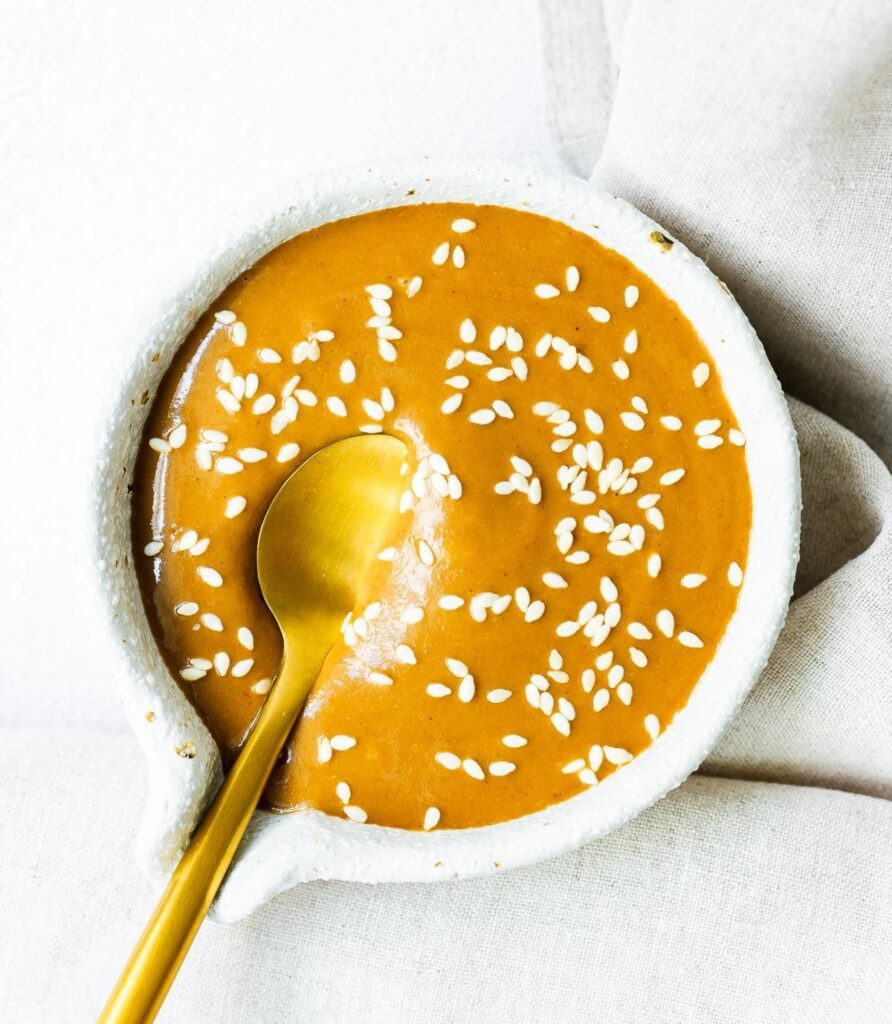
Flavor Profile: Rich, creamy, nutty, and slightly sweet.
Japanese sesame dressing, also known as Goma Dare, is a creamy, nutty dressing made primarily with sesame seeds. It’s commonly used in Japanese cuisine to dress salads, tofu, and vegetables, providing a rich and savory taste. The combination of toasted sesame oil, soy sauce, and rice vinegar creates a well-rounded dressing that is sweet, tangy, and earthy.
Ingredients for Japanese Sesame Dressing:
- 3 tablespoons sesame oil
- 2 tablespoons soy sauce
- 2 tablespoons rice vinegar
- 1 tablespoon sugar (or honey)
- 1/4 cup ground sesame seeds (toasted)
- 1 teaspoon grated ginger (optional)
Instructions:
- In a small bowl, combine the sesame oil, soy sauce, rice vinegar, and sugar (or honey).
- Add the ground sesame seeds and whisk until smooth.
- Optionally, grate some ginger into the dressing for added spice.
- Taste and adjust the seasoning if needed.
This Asian salad dressing recipe is ideal for Japanese cucumber salads (sunomono) or any vegetable-based dishes that need a rich, nutty dressing.
2. Thai Peanut Dressing
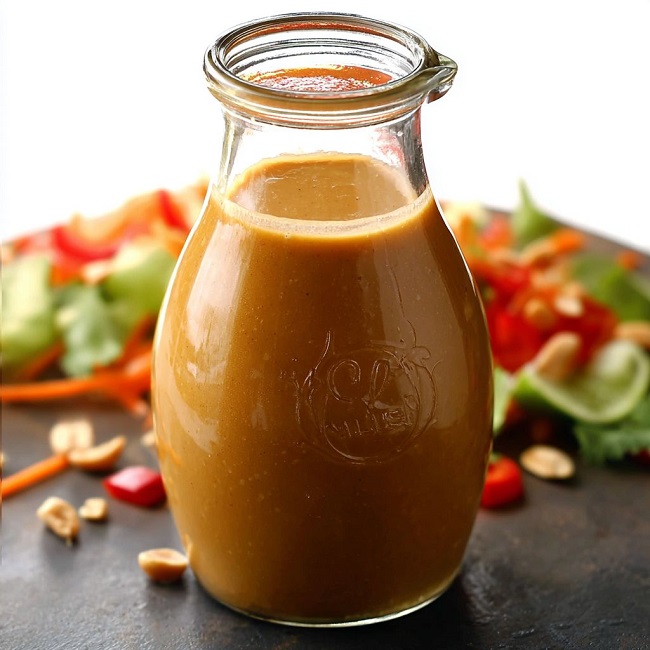
Flavor Profile: Creamy, nutty, slightly spicy, and tangy.
Thai peanut dressing is an incredibly popular choice for Thai-inspired salads, noodle bowls, and even as a dipping sauce for spring rolls. The richness of peanut butter is balanced by the tang of lime juice and the savory kick of soy sauce, while a dash of sriracha or chili flakes adds a spicy finish. This Asian salad dressing recipe is creamy, flavorful, and just the right amount of spicy.
Ingredients for Thai Peanut Dressing:
- 3 tablespoons peanut butter (creamy or chunky)
- 2 tablespoons soy sauce or tamari (for a gluten-free option)
- 2 tablespoons rice vinegar or lime juice
- 1 tablespoon honey or maple syrup
- 1 teaspoon sesame oil
- 1-2 teaspoons sriracha (for spice)
- 1-2 tablespoons water (to thin the dressing)
Instructions:
- In a bowl, whisk together the peanut butter, soy sauce, rice vinegar, honey, and sesame oil.
- Add the sriracha and adjust the heat level to your liking.
- Gradually add water to achieve the desired consistency.
- Taste and adjust sweetness, acidity, or spice levels to your preference.
This Asian salad dressing recipe pairs wonderfully with Thai-inspired salads, noodle bowls, or even grilled chicken for a fresh and satisfying meal.
3. Korean Soy-Garlic Dressing
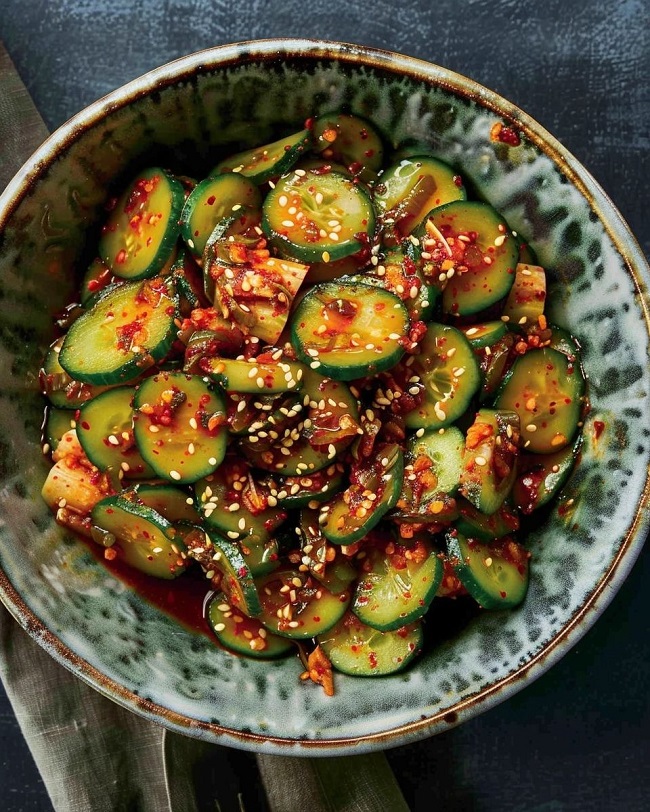
Flavor Profile: Savory, garlicky, slightly spicy, and tangy.
Korean-style soy-garlic dressing is a bold and aromatic option that’s both savory and sweet. The garlic brings an intense flavor, while gochugaru (Korean chili flakes) or gochujang (chili paste) adds a delightful spicy kick. The addition of sesame oil and soy sauce enhances the umami depth of the dressing, making it a perfect complement for Korean salads, bibimbap, and grilled meats.
Ingredients for Korean Soy-Garlic Dressing:
- 3 tablespoons soy sauce or tamari
- 2 tablespoons rice vinegar
- 2 teaspoons sugar or honey
- 2 teaspoons sesame oil
- 2 cloves of garlic, minced
- 1 teaspoon gochugaru or gochujang (optional for heat)
- 1 tablespoon sesame seeds
Instructions:
- Combine the soy sauce, rice vinegar, sugar, and sesame oil in a bowl.
- Add the minced garlic and gochugaru (or gochujang) for heat.
- Whisk everything together and top with sesame seeds.
- Taste and adjust seasoning, adding more sugar or vinegar if necessary.
This Asian salad dressing recipe works wonderfully for Korean-style cabbage salads, bibimbap, or as a marinade for grilled meats.
4. Vietnamese Nuoc Cham
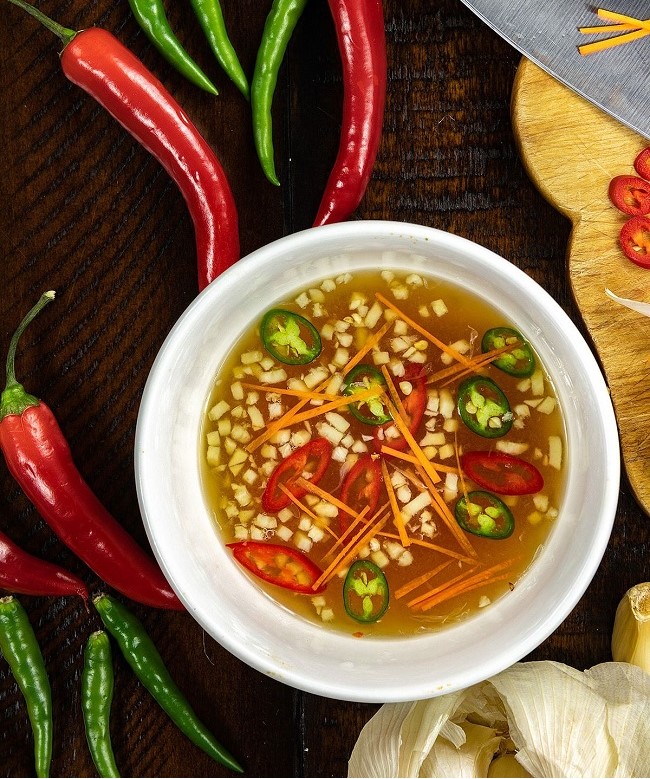
Flavor Profile: Sweet, tangy, salty, and spicy.
Nuoc Cham is a classic Vietnamese dressing and dipping sauce that combines the flavors of fish sauce, lime juice, and sugar. It’s light, aromatic, and the perfect balance of salty, sweet, and sour. The garlic and chili add layers of freshness and heat, making it a versatile dressing for Vietnamese rice noodles, spring rolls, or even as a drizzle over roasted vegetables.
Ingredients for Vietnamese Nuoc Cham:
- 3 tablespoons fish sauce
- 2 tablespoons lime juice
- 1 tablespoon sugar (or palm sugar for authenticity)
- 1 clove of garlic, minced
- 1-2 teaspoons chili flakes or fresh chili, minced
- 2 tablespoons water
Instructions:
- In a small bowl, combine the fish sauce, lime juice, and sugar. Stir until the sugar dissolves.
- Add minced garlic and chili flakes or fresh chili for spice.
- Add water to balance the intensity of the fish sauce.
- Stir and adjust the seasoning to taste.
This Asian salad dressing recipe is ideal for Vietnamese rice noodle salads, pho, or as a dipping sauce for spring rolls.
5. Chinese Ginger-Sesame Dressing
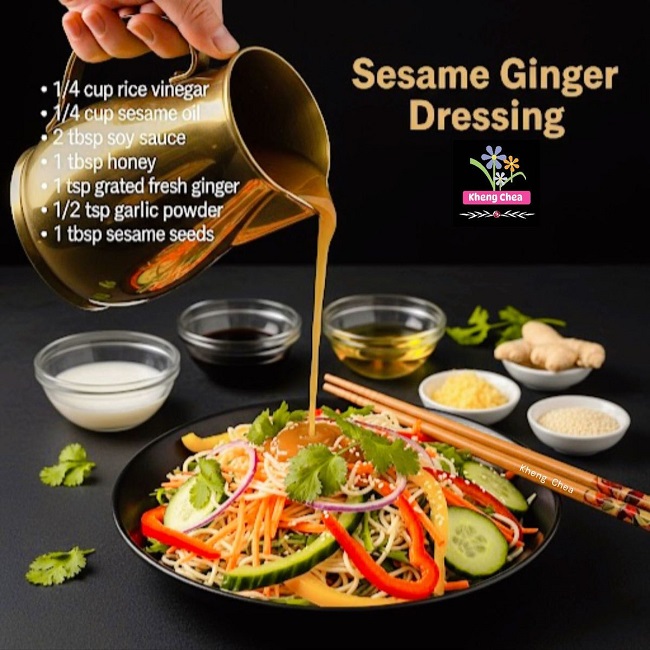
Flavor Profile: Light, tangy, earthy, and subtly sweet.
Chinese-style ginger-sesame dressing is a light and flavorful option with a refreshing kick from fresh ginger. It’s typically used in Chinese cabbage salads, adding a pleasant balance of flavors. The soy sauce provides umami, while the sesame oil and rice vinegar offer depth and acidity. This dressing is simple to make and perfect for lighter dishes.
Ingredients for Chinese Ginger-Sesame Dressing:
- 2 tablespoons soy sauce or tamari
- 2 tablespoons rice vinegar
- 1 tablespoon sesame oil
- 1 tablespoon honey or maple syrup
- 1 tablespoon fresh ginger, grated
- 1 teaspoon sesame seeds
Instructions:
- In a bowl, combine soy sauce, rice vinegar, sesame oil, and honey.
- Add the grated ginger and whisk until smooth.
- Garnish with sesame seeds for added texture.
- Taste and adjust the seasoning, adding more honey or vinegar if needed.
This Asian salad dressing recipe is perfect for Chinese cabbage salads, cold tofu, or as a topping for wonton soup.
Tips for Using These Variations
- Mix & Match: You can combine elements from different styles for your own signature Asian Salad Dressing Recipe.
- Meal Prep Friendly: Store dressings in airtight jars in the fridge for up to a week.
- Customization: Adjust sweetness, saltiness, and spiciness to suit your taste.
Health Benefits of Homemade Asian Salad Dressing
When you make your own Asian salad dressing recipe, you gain full control over the ingredients, ensuring a healthier and more flavorful alternative to store-bought versions. Homemade dressings are packed with natural, nutrient-dense ingredients, free from preservatives and artificial additives. In this guide, we explore the numerous health benefits of creating a homemade Asian salad dressing recipe, focusing on ingredients that promote well-being and enhance flavor.
Made with Natural Ingredients
One of the top reasons to choose a homemade Asian Salad Dressing Recipe is the control it gives you over every ingredient. Unlike commercial dressings, which often contain preservatives, artificial flavors, and excess sugar or sodium, making your own ensures a clean, wholesome, and healthy option. You can customize the dressing to suit your dietary needs — vegan, gluten-free, or low-sodium — while keeping it fresh and flavorful.
Healthy Fats for Heart and Body
Key ingredients like sesame oil and olive oil provide healthy fats that are essential for heart health and nutrient absorption. These oils are rich in antioxidants and essential fatty acids, supporting overall wellness. The nutty aroma of sesame oil also enhances the taste of your dishes, making this Asian Salad Dressing Recipe both nutritious and delicious.
Ginger, Garlic, and Vinegar for Digestion
A homemade Asian Salad Dressing Recipe often includes fresh aromatics and acidic ingredients that aid digestion and boost metabolism:
- Ginger: Reduces bloating and supports gut health.
- Garlic: Has natural anti-inflammatory and immune-boosting properties.
- Rice vinegar or lime juice: Helps balance blood sugar and enhances nutrient absorption.
Lower Sugar and Sodium
By making your own Asian Salad Dressing Recipe, you control the amount of sugar and salt. Using natural sweeteners like honey or maple syrup and adjusting soy sauce or tamari ensures a dressing that’s balanced, light, and healthier than most store-bought options. This makes it ideal for daily use, meal prep, or anyone looking to maintain a nutritious diet.
Additional Health Benefits
- Rich in antioxidants from ginger, garlic, and sesame oil
- Supports weight management by encouraging fresh vegetable consumption
- Customizable to suit special diets like vegan or gluten-free
- Enhances flavor without added chemicals or preservatives
A homemade Asian Salad Dressing Recipe isn’t just a condiment — it’s a simple way to make your meals healthier, more flavorful, and nutritionally balanced.
Serving Ideas – What to Pair with Asian Salad Dressing
A homemade Asian salad dressing recipe is not only flavorful but also versatile, making it the perfect addition to a variety of dishes. Whether you’re preparing fresh salads, hearty grain bowls, or pairing it with grilled proteins, this dressing enhances the natural flavors of your meal. Below are some delicious and healthy ways to incorporate your Asian salad dressing recipe into your meals, providing both flavor and nutrition.
1. Perfect Salads: Cabbage Slaw, Cucumber Salad, and Green Salad
One of the best uses for your Asian salad dressing recipe is to drizzle it over fresh, crunchy salads. The nutty sesame oil and tangy vinegar in the dressing balance beautifully with the crisp texture of vegetables, creating a light yet satisfying dish.
- Cabbage Slaw: A cabbage slaw made with shredded cabbage, carrots, and bell peppers makes a perfect match for your Asian salad dressing recipe. The acidity from the vinegar and the depth from sesame oil enhance the slaw’s crunchiness, adding complexity without overpowering the vegetables.
- Cucumber Salad: This refreshing salad pairs wonderfully with your Asian salad dressing recipe. Thinly sliced cucumbers and a light drizzle of dressing create a cool, satisfying side dish, perfect for hot summer days.
- Green Salad: For a simple, healthy salad, use your Asian salad dressing recipe on mixed greens like spinach, arugula, or kale. The dressing’s savory and slightly sweet flavor complements the greens, giving your salad the perfect balance of fresh and bold flavors.
2. Pair with Grilled Chicken, Shrimp, or Tofu
Your Asian salad dressing recipe works exceptionally well as a marinade or topping for grilled proteins. The acidity and umami-rich flavors from ingredients like soy sauce and sesame oil enhance the natural flavors of grilled chicken, shrimp, or tofu.
- Grilled Chicken: Marinate chicken breast or thighs in your Asian salad dressing recipe for a few hours before grilling. The dressing infuses the chicken with flavor, resulting in a tender, savory dish. You can also drizzle the dressing over grilled chicken for added richness.
- Grilled Shrimp: The Asian salad dressing recipe perfectly complements the natural sweetness of shrimp. Marinate the shrimp in the dressing before grilling, or drizzle it over cooked shrimp for an extra layer of flavor.
- Grilled Tofu: For a vegetarian option, grilled tofu takes on the bold, savory flavors of your Asian salad dressing recipe. Whether you’re grilling tofu cubes or slabs, the dressing adds depth and richness, making it a satisfying, plant-based protein option.
3. Great with Rice Bowls or Cold Noodles
If you’re looking to elevate your Asian salad dressing recipe for a hearty meal, try pairing it with rice bowls or cold noodles. These dishes allow the dressing to shine and enhance the flavors of the ingredients.
- Rice Bowls: Create a nutritious, well-rounded meal by topping a rice bowl with your Asian salad dressing recipe. Add cooked rice, sautéed vegetables, grilled proteins (like chicken or tofu), and a drizzle of dressing for a delicious and filling dish. This combination brings together the rich flavors of the dressing with the earthiness of the rice and the freshness of vegetables.
- Cold Noodles: Whether you prefer soba noodles, rice noodles, or vermicelli noodles, cold noodle dishes are the perfect vehicle for your Asian salad dressing recipe. Toss the noodles with your dressing, and add some grilled chicken, shrimp, or vegetables for a light, refreshing meal.
4. Use as a Dip for Spring Rolls and Dumplings
Your Asian salad dressing recipe can double as a dipping sauce for appetizers like spring rolls and dumplings. The rich umami flavors from soy sauce and sesame oil, combined with the acidity of vinegar, make the perfect accompaniment to both fresh and fried appetizers.
- Spring Rolls: Serve your Asian salad dressing recipe alongside fresh or fried spring rolls for dipping. The light and tangy dressing enhance the flavors of the rolls, which are often filled with fresh vegetables, herbs, and protein.
- Dumplings: Whether steamed or pan-fried, dumplings benefit from the savory and slightly sweet kick of your Asian salad dressing recipe. It adds a burst of flavor to every bite, making it a great choice for dipping.
5. Drizzle Over Roasted Vegetables
Roasted vegetables like brussels sprouts, sweet potatoes, broccoli, or cauliflower pair beautifully with your Asian salad dressing recipe. The rich flavors of the dressing are absorbed by the warm vegetables, creating a savory, flavorful side dish.
- Roasted Vegetables: Once roasted, drizzle your Asian salad dressing recipe over the vegetables to add a final layer of flavor. The tangy, slightly sweet dressing enhances the natural sweetness of roasted vegetables, making it a perfect complement to any meal.
Tips for Making and Storing Your Asian Salad Dressing
A homemade Asian Salad Dressing Recipe is not only fresh and flavorful but also easy to make in advance and store for later use. With the right techniques and storage practices, you can enjoy perfectly textured, delicious dressing anytime without compromising quality or taste.
Use the Right Containers
For long-lasting freshness, always store your dressing in glass jars or airtight bottles. Glass is non-reactive, preserving the natural flavors of your ingredients without any chemical interference. Airtight containers prevent air from entering, which helps maintain the integrity of oils, vinegars, and aromatics in your dressing.
Pro Tip: Mason jars or small glass bottles with tight lids work perfectly for both storing and shaking your dressing before use.
Shake or Whisk Before Serving
Separation of oil, vinegar, and sweeteners is normal in a homemade dressing. To restore smooth, emulsified consistency:
- Shake: Close the jar tightly and shake vigorously for 10–20 seconds.
- Whisk: Pour the dressing into a small bowl and whisk until fully blended.
Shaking or whisking ensures that every drizzle of your Asian Salad Dressing Recipe has balanced flavors and a silky texture, perfect for salads, noodles, or grilled proteins.
Proper Storage
Refrigeration is key to maintaining freshness since homemade dressings do not contain preservatives:
- Shelf life: 7–10 days in the fridge
- Tip: Label the jar with the preparation date to easily track freshness
If you notice changes in color, smell, or texture, discard the dressing to ensure safety.
Additional Tips for Maximum Flavor
- Make small batches: Prepare only what you can consume within a week for peak freshness.
- Add creamy elements last: If using tahini, yogurt, or mayonnaise, mix them in just before serving to prevent separation.
- Fresh herbs: Add delicate herbs like cilantro or basil at the time of serving to retain flavor and color.
Conclusion
Making your own Asian Salad Dressing Recipe at home is the ultimate way to enjoy a fresh, healthy, and easy alternative to store-bought dressings. Homemade dressings allow you to control every ingredient, avoid unnecessary preservatives, excess sugar, or sodium, and customize flavors to suit your personal taste. This ensures every salad, noodle bowl, or grilled dish is elevated with authentic Asian flavors that are vibrant, balanced, and irresistible.
One of the biggest advantages of a homemade Asian Salad Dressing Recipe is its unmatched freshness. Ingredients like soy sauce, sesame oil, rice vinegar, garlic, and ginger combine to create a bold umami taste that bottled dressings simply cannot replicate. It’s quick to prepare, versatile, and perfect for adding a flavorful boost to everyday meals.
The versatility of this Asian Salad Dressing Recipe is endless. You can experiment with sweet, tangy, or spicy variations, try Japanese sesame, Thai peanut, or Korean soy-garlic styles, and adjust each batch to your liking. This flexibility makes it ideal for salads, grain bowls, roasted vegetables, grilled meats, or even as a dipping sauce — offering a healthy and exciting way to elevate your meals.
Don’t miss the chance to bring restaurant-quality flavor to your kitchen. Try this Asian Salad Dressing Recipe today and experience a burst of authentic Asian flavor in every bite! With its fresh, healthy, and easy preparation, this dressing will quickly become a staple in your home, delighting your taste buds and impressing family and friends alike.
(FAQ)s
What makes Asian salad dressing unique?
An Asian Salad Dressing Recipe is unique because it masterfully balances sweet, salty, tangy, and umami flavors in one dressing. Ingredients such as soy sauce, rice vinegar, sesame oil, ginger, and garlic create a refreshing yet savory taste that complements salads, noodles, and proteins. Unlike traditional Western dressings, this style combines acidity, sweetness, and aromatic oils, giving your dishes a distinct and vibrant flavor profile.
Can I make it without soy sauce?
Yes! For a soy-free version of this Asian Salad Dressing Recipe, you can substitute soy sauce with tamari, coconut aminos, or liquid aminos. These alternatives provide a similar depth of umami flavor while making the dressing gluten-free or suitable for those avoiding soy.
How long can it last in the fridge?
A homemade Asian Salad Dressing Recipe typically lasts 7–10 days when stored in a clean glass jar or airtight container in the refrigerator. Always shake or whisk before use, as natural separation is normal. Discard the dressing if it develops off smells, discoloration, or any signs of spoilage to ensure safety and freshness.
Is this recipe vegan or gluten-free?
This Asian Salad Dressing Recipe is easily adaptable for vegan or gluten-free diets:
Vegan: Replace honey with maple syrup.
Gluten-Free: Use tamari or coconut aminos instead of soy sauce.
All other ingredients, including ginger, garlic, rice vinegar, and sesame oil, are naturally vegan and gluten-free, making it a versatile, healthy option for everyone.
Can I use it as a marinade?
Absolutely! This versatile Asian Salad Dressing Recipe works wonderfully as a marinade for:
Grilled chicken or shrimp
Pan-fried tofu or tempeh
Roasted vegetables
Marinate proteins for 30 minutes to a few hours before cooking. The dressing infuses flavor into your proteins while adding a fresh, restaurant-quality taste to your meals.